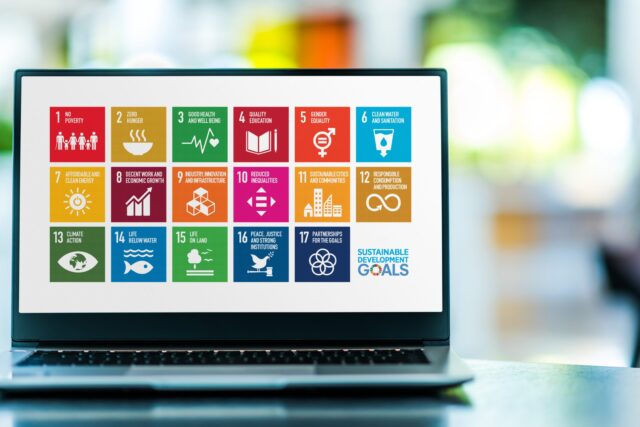
Navigating the path to a sustainable, resilient, and inclusive future requires global participation. The journey may seem daunting, but the approach is simple: one step at a time. The United Nations Sustainable Development Goals (UN SDGs) play a pivotal role in guiding each step.
Introducing the UN SDGs
The United Nations Sustainable Development Goals (UN SDGs) are 17 interconnected goals established by the UN in 2015. The purpose of achieving these goals is to tackle the world’s most pressing challenges.
The goals cover a wide range of issues, including combatting poverty and hunger, promoting comprehensive healthcare and education, achieving gender equality, and addressing climate change.
Below, we included a simple guide to investing in SDGs, which also breaks down the purpose of each goal.
Each SDG is accompanied by specific targets and indicators to measure progress. Originally intended to guide governments and policymakers, these goals have also become a powerful framework for businesses, investors, and individuals.
The impact and opportunity of investing in SDGs
Particularly in developing nations, significant investment is required to meet these goals—an estimated additional $4 trillion annually.1 This financial gap presents a dual opportunity: to alleviate global challenges and to cultivate new sustainable markets.
Investors have the chance to support innovations such as clean energy solutions, accessible digital education, and advanced medical treatments for underserved populations.
For retail investors interested in contributing to a sustainable future, investing in SDGs can be a way to achieve both social and environmental impacts alongside financial gains. This approach helps build a more resilient and prosperous world for future generations.
A simple guide to investing in SDGs
The UN SDGs and ways to engage as an investor
Click through each of the 17 Sustainable Development Goals below to learn more about the issue at hand, key statistics and ways to invest.
A tip from us: Bookmark this article by adding it to your search engine’s ‘favourites’ bar to always have a simple guide to the UN SDGs on hand.
This SDG aims to eradicate poverty in all its forms by 2030. Despite significant progress in reducing extreme poverty over the last few decades, over 700 million people worldwide live on less than $1.90 a day.
If current trends continue, by 2030, 575 million people will still be living in extreme poverty
One way to invest in SDG 1 is by identifying businesses that are creating new jobs, expanding into underserved areas and targeting businesses in less developed countries and with vulnerable populations.
Furthermore, companies can implement programs to economically empower disadvantaged groups and ensure decent working conditions across their own business and supply chain.
Example investments:
Microfinance, Development Bank Debt, Digital Finance Platforms
SDG 2 focuses on ending hunger, achieving food security, improving nutrition, and promoting sustainable agriculture. It recognises the critical role of the food and agriculture sector in addressing development challenges and eradicating hunger and poverty.
1 in 3 people worldwide struggle with moderate to severe food insecurity
More than 600 million people worldwide are projected to face hunger in 2023
To invest in SDG 2, identify companies with services aimed at improving food security and nutrition for underserved populations. This can also include products and services that make food production more efficient and reduce wastage.
Example investments:
Agricultural Technology, Consumer Staples (i.e. food and drinks companies), Water Infrastructure
Goal 3 emphasises the importance of ensuring healthy lives and promoting well-being for all ages. It underscores the significance of quality healthcare services, disease prevention, and overall well-being to achieve a prosperous and sustainable world.
Out-of-pocket payments for health pushed or further pushed 381 million people (4.9% of the population) into extreme poverty
To invest in SDG 3, a good starting point is emphasising the promotion of healthy lifestyles and the development and improvement of the healthcare sector through drug discovery or the building of hospitals and other medical facilities.
Example investments:
Healthcare, Biotechnology, Medical Equipment and Supplies
SDG 4 focuses on the transformative power of education in empowering individuals and communities, contributing to social progress and driving economic growth. Despite slow progress, the world is falling far behind in achieving quality education.
Low- and lower-middle-income countries face a nearly $100 billion annual financial gap to reach their education targets
The fifth SDG emphasises gender equality as a fundamental human right crucial for building a peaceful, prosperous, and sustainable world. Unfortunately, the world is not currently on track to achieve gender equality by 2030.
At the current rate, it will take 140 years to achieve equal representation in leadership in the workplace
To invest in SDG 5, engage with women-led businesses, women-focused businesses, businesses that promote gender equality through ensuring equal pay, and those that are increasing female representation in leadership.
Example investments:
Women-led businesses, Companies with strong gender equality practices, Microfinance
Access to safe water is considered essential for sustainable development and is a fundamental human need that impacts health, sanitation, and overall quality of life. Water scarcity, compounded by conflicts, climate change, and pollution, poses a dual threat to both human well-being and environmental sustainability worldwide.
81% of species dependent on inland wetlands have declined since 1970
In 2022, 2.2 billion people lacked safely managed drinking water and 3.5 billion lacked safely managed sanitation
SDG 7 recognises that access to affordable and clean energy is crucial for sustainable development, as it underpins economic growth, environmental protection, and social well-being. To ensure access to clean energy for all by 2030, we must accelerate electrification, increase investments in renewable energy sources and invest in improving electricity grids.
675 million people still live in the dark; 4 in 5 of them are in sub-Saharan Africa
To invest in SDG 7, one can support initiatives that bring together businesses, governments, and civil society to develop innovative clean energy solutions and improve accessibility.
Example investments:
Renewable Energy Generation, Battery Storage, Grid Efficiency
This goal focuses on promoting inclusive, productive employment, and decent work for all. It emphasises the importance of creating conditions that enable people to have quality jobs, which are essential for reducing poverty and fostering economic development.
1 in 4 young people are not in education, employment or training, with young women more than twice as likely as young men to be in this situation
SDG 9 highlights the role of industry in driving economic growth, job creation, and technological advancement. The goal calls for the building of resilient infrastructure, promotion of inclusive and sustainable industrialisation, and fostering of innovation.
Energy-related CO2 emissions reached 36.8 billion metric tons in 2022, a record high
To invest in SDG 9, one route is by identifying governmental debt, supra-governmental debt, or technologies that improve infrastructure efficiency and enhance industrial processes.
Example investments:
Education Providers, Labelled Bonds, Development Bank Debt
Goal 10 aims to reduce inequalities within and among countries. It emphasises the need for universal policies that address the needs of disadvantaged and marginalised populations to create a more equitable society.
In 2022, refugee numbers hit a record high of 34.6 million, 41% of them were children
In order to invest in SDG 10, one method is to direct capital towards initiatives that aim to bridge social and economic disparities. In addition, one could engage with companies and policymakers to advocate for fairer labour practices.
Example investments:
Social Housing, Social Outcome Bonds, Development Bank Debt
This goal envisions a future where cities provide opportunities for all residents, ensuring access to basic services like energy, housing, and transportation. It emphasises sustainable urban development to create inclusive and resilient communities.
Globally, only one in two urban residents have convenient access to public transportation
To invest in SDG 11, investors can support the development of sustainable and resilient urban infrastructure, such as renewable energy systems, public transportation, affordable housing, and waste management solutions.
By promoting responsible consumption and production patterns, SDG 12 drives sustainable practices that minimise waste generation, reduce environmental impact, and ensure efficient resource use.
On average, each person wastes 120 kilograms of food per year
One way to invest in SDG 12 is by identifying companies that prioritise responsible consumption and production practices, such as reducing waste, promoting recycling, and adopting sustainable supply chain management.
Goal 13 addresses the urgent need to take action against climate change. It highlights the global challenge posed by climate change and emphasises the importance of mitigation, adaptation, and resilience-building efforts.
The rate of sea-level rise has doubled in the last decade
Global climate finance flows reached an annual average of $803 billion in 2019-2020, however, developing countries require nearly $6 trillion by 2030
To invest in SDG 13, engage with businesses developing technologies, products, and services aimed at mitigating climate change impacts and supporting climate adaptation efforts.
Urgent action is needed to preserve the planet’s largest ecosystem. This goal emphasises the careful management of marine resources to protect marine ecosystems, combat pollution and promote sustainable fishing practices.
One in five fish caught originates from illegal, unreported and unregulated fishing
One can invest in SDG 14 by engaging with projects and initiatives focused on conserving and restoring marine ecosystems, reducing marine pollution and sustainably managing fish stocks.
SDG 15 recognises that a fundamental shift in society’s relationship with nature is essential. It aims to sustainably manage forests, combat desertification, halt biodiversity loss, and reverse land degradation. It underscores the importance of preserving terrestrial ecosystems for biodiversity conservation and sustainable development.
The world is currently facing the largest species extinction event since the dinosaur age
100 million hectares (two times the size of Greenland) of healthy and productive land was degraded every year from 2015-2019
To invest in SDG 15, focus on companies that develop and implement nature-based solutions, such as sustainable forestry, ecosystem restoration, and biodiversity conservation initiatives.
Example Investments:
Forestry, Environmental Remediation, Regenerative Agriculture Systems and Suppliers
Ongoing and new conflicts around the world are derailing a global path to peace. Goal 16 focuses on promoting peaceful societies with access to justice for all by building effective, accountable institutions.
One quarter of humanity lives in conflict-affected areas
Political and social stability are crucial factors for investors who wish to invest in SDG 16, as they provide a more predictable and secure environment for their investments. Engaging with institutions to improve their governance, transparency and respect for the rule of law could involve active engagement, voting, and collaboration with other investors and stakeholders.
Example investments:
Government Bonds, Development Bank Bonds, Cybersecurity
The final SDG underscores the need for collaboration among governments, businesses, civil society, and other stakeholders to achieve the SDGs by leveraging resources and expertise. According to the UN, progress on SDG 17 has been mixed, with some advances in areas like development aid and access to technology, yet funding remains a significant challenge.
As of November 2022, 37 out of 69 of the world’s poorest countries were in debt distress or at high risk of it
To engage in SDG 17, investors can drive better transparency and accountability in their investments, while working with institutions and governments to drive change.
Example investments:
Telecommunications, Emerging Market Capacity Building, Government and Development Bank Bonds
Tribe Impact Capital LLP is authorised and regulated by the Financial Conduct Authority (“FCA”). Our FCA registration details are set out in the FCA Register under Firm Reference number 756411 (www.fca.org.uk). Tribe Impact Capital LLP is registered in England and Wales (registered number OC411984) and our registered office is 52 Jermyn Street, London SW1Y 6LX.
This document does not provide you with enough information to make an informed investment decision. Neither does it constitute advice or a personal recommendation or take into account the particular investment objectives, financial situations or needs of individual clients. If you are not an existing client of Tribe Impact Capital LLP, this document is considered to be marketing material. Whilst this document may contain information about specific companies it is not an investment research report as defined by the FCA.
This document is not intended and should not be construed as an offer, solicitation or recommendation to buy or sell any investments. You are recommended to seek advice concerning suitability of any intended investment decision from your investment adviser. Past performance is not a reliable indicator of future performance; and the value of investments, as well as the income from them can go down as well as up. Investors may get back less than the original amount invested. Any type of impact investment will involve risk to investors capital and the expected environmental or social return may not be achieved.
The information and opinions expressed herein are based on current public information we believe to be reliable; but we do not represent that they are accurate or complete, and they should not be relied upon as such. Any information herein is given in good faith but is subject to change without notice. No liability is accepted whatsoever by Tribe Impact Capital LLP or its employees and associated companies for any direct or consequential loss arising from this document. This document is not for distribution outside the European Economic Area.
The information in this section is intended for retail clients based in the United Kingdom who are seeking information about Tribe Impact Capital’s wealth management services. It does not constitute personalised financial advice or a recommendation to engage in any investment strategy.
Our services are designed for clients who understand that investment involves risk, and the value of investments can fluctuate where capital is at risk. Before making any investment decision, you should consider your personal circumstances and, where appropriate, seek professional financial advice.
By entering this section, you confirm that you are a UK resident. You also confirm you agree to comply with the legal & regulatory information of this site.
This section is intended for UK-based charitable organisations, foundations, and not-for-profit entities. The information provided is for general guidance only and does not constitute investment advice, an offer, or solicitation to engage in any investment activity.
Charities should ensure that any investment decisions are consistent with their governing documents, fiduciary duties, and ethical or mission-aligned investment policies. The value of investments can fall as well as rise and may not be suitable for all charitable purposes.
By proceeding, you confirm that you are accessing this content in your capacity as a representative of a UK charity, foundation or not-for-profit organisation. You also confirm you agree to comply with the legal & regulatory information of this site.
This section is intended solely for professional advisers, including FCA-authorised and regulated financial advisers, wealth planners, and intermediaries. The information is not suitable for retail clients and must not be distributed to or relied upon by retail investors.
The information provided is for general guidance only and does not constitute investment advice, an offer, or solicitation to engage in any investment activity. Any investment decision remains the responsibility of the adviser and their client. Investments carry risk, including loss of capital, and may not be suitable for all clients.
By entering, you confirm that you are a UK-based professional adviser as defined by the FCA and are not a retail investor. You also confirm you agree to comply with the legal & regulatory information of this site.
The content in this section is intended for institutional investors, including pension funds, endowments, family offices, investment companies, and other professional clients as defined by the FCA. It is not directed at retail investors.
The information provided is for general guidance only and does not constitute investment advice, an offer, or solicitation to engage in any investment activity. Investments carry risk, including loss of capital, and may not be suitable for all clients.
By entering this section, you confirm that you are acting on behalf of a UK institutional or professional client and not a retail investor. You also confirm you agree to comply with the legal & regulatory information of this site.
This section is intended for UK-based charitable organisations, foundations, and not-for-profit entities. The information provided is for general guidance only and does not constitute investment advice, an offer, or solicitation to engage in any investment activity.
Charities should ensure that any investment decisions are consistent with their governing documents, fiduciary duties, and ethical or mission-aligned investment policies. The value of investments can fall as well as rise and may not be suitable for all charitable purposes.
By proceeding, you confirm that you are accessing this content in your capacity as a representative of a UK charity, foundation or not-for-profit organisation. You also confirm you agree to comply with the legal & regulatory information of this site.
The following content is not suitable for any person outside of the UK
Please read this important information carefully. By responding to this Disclaimer and selecting “I AGREE,” you confirm that you have read, understood, and accepted its contents, and that you are a UK resident before accessing this content.
Purpose and Scope
This content is not a financial promotion within the meaning of Section 21 of the Financial Services and Markets Act 2000 (FSMA). This content is provided for informational purposes only and is not intended to constitute investment, legal or tax advice, an offer to sell, or a solicitation of an offer to subscribe for or purchase any investment. The distribution of information on this website should not form the basis of, or be relied upon in connection with, any contract or investment decision.
Intended Audience
This content is not suitable for retail investors and only made available to investors categorised as Professional within the criteria detailed in COBS 3.5. Reliance on the contents of this website for the purposes of engaging in investment activity may expose individuals to significant financial risk, including the potential loss of capital invested.
Relationship
Tribe, is not acting as an agent, advisor, or providing any services to the viewers of this content. Accessing this content does not create a client relationship.
Risk Warning
Private markets investments are speculative and involve a high degree of risk and those participating investors risk losing all of the capital they invest. Investments in private equity are highly illiquid and those investors who cannot hold an investment for the long term (at least 5-10 years) should not invest. Prospective investors should carefully consider the risk warnings and disclosures before making an investment.
The value of an investment may go down as well as up and investors may not get back their money originally invested. Past performance is not necessarily a guide to future performance.
Information
Tribe makes best efforts to ensure that the sources and data presented on this website are accurate at the time of publishing. However, Tribe cannot guarantee that all information displayed will be relevant, suitable, or up-to-date. Content may be subject to change without notice.