
DecarbonisationDecarbonisationThe removal or reduction of carbon dioxide (CO2) output into the atmosphere. read more underpins global efforts to limit warming and protect the world from climate risksClimate riskRisk assessments based on formal analysis of the consequences, likelihoods and responses to the impacts of climate change and how societal and regulatory constraints shape adaptation options. read more. As momentum continues to accelerate, investing in decarbonisation offers diverse opportunities across sectors like energy, transport, construction and agriculture.
Why investing in decarbonisation matters
In order to avoid the worst impacts of climate change and preserve a liveable planet, scientists agreed global temperature increase needs to be limited to no more than 2°C above pre-industrial levels. In the 2015 Paris Climate Agreement, it was agreed to pursue limiting the temperature increase to within 1.5°C. However, in 2024, the world breached that 1.5° target for the first time.1
In order to keep within the target of 2°C, we need to rapidly increase the scale and pace of change globally. For this, transformation and innovation are needed in every sector. And for impact investors, that means there’s opportunity in every sector.
Often, investors look to renewable energyRenewable energyEnergy production technology that relies on unlimited natural sources, such as wind and solar. read more and infrastructure, which draws a clear line to decarbonisation. But, looking beyond renewables, it’s clear there are many sectors contributing to global emissions and actively adapting to meet the world’s climate targets. Transportation, building and construction, and agriculture are strong examples of areas of opportunity for impact investors.
The global push to decarbonisation
Since the Paris Climate Agreement, substantial progress on decarbonisation has been made worldwide. There are now over 5,000 climate laws and policies globally.2 As of September 2024, 73% of global emissions is covered by net zeroNet ZeroReducing absolute greenhouse gas emissions to as close to zero as possible. This is done via reductions in core emissions (through process efficiencies and product adaptation) across a business’s Scope 1, Scope 2 and Scope 3 footprint. read more targets – set by 149 different countries.3
In Europe, there’s been a range of activity since the signing of the Paris Agreement in 2015. In November 2019, the European Parliament declared a climate and environmental emergency in Europe and worldwide. This call was followed by the adoption of the European Climate Law in 2021. The law binds the European Union to achieve climate neutrality by 2050 and sets a target of reducing net greenhouse gas (GHG)Greenhouse gasThe six main greenhouse gases covered by the Kyoto Protocol: Carbon dioxide (CO2); Methane (CH4); Nitrous oxide (N2O); Hydrofluorocarbons (HFCs); Perfluorocarbons (PFCs); and Sulphur hexafluoride (SF6) read more emissions by at least 55% by 2030, compared to 1990 levels.
The European Commission is currently preparing to propose a binding interim climate target for 2040, aiming for a 90% cut in emissions from 1990 levels as recommended by its independent scientific advisory board.4 The goal is intended to bridge the gap between the 55% reduction due by 2030 and the bloc’s net zero target for 2050.
That said, the 30th Conference of the PartiesConference of the Parties (COP)The Convention of the Parties to the United Nations Framework Convention on Climate Change (UNFCCC). The COP is the highest decision-making body of the Convention. Every year the UNFCCC hosts the COP to drive action on climate change. read more (COP 30) is approaching later this year, and the US is due to exit from the Paris Climate Agreement in January 2026, a year after confirming its withdrawal. All eyes are on where further progress can be made, and existing advancements can be scaled.
You might also like: The importance of green job creation for decarbonisation
Investing in the solution
1. The shift to electric vehicles
It’s imperative to decarbonise all forms of transportation, but especially road transportation. The entire transportation sector accounts for approximately 21% of total global emissions. Passenger vehicles – cars and buses – account for three-quarters of that, at 15%.5
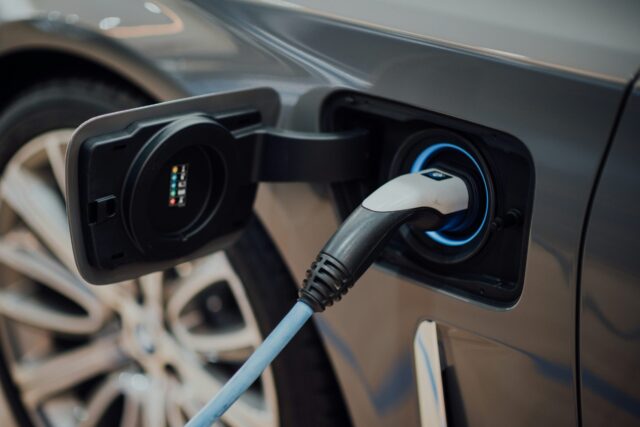
Electric vehicles (EVs) are an incredibly important solution to the decarbonisation of transportation, and around the world, countries and consumers alike are meeting this demand. Bloomberg New Energy Finance (NEF) reported that peak sales for non-electric vehicles has already happened – and it was in 2017.6 In 2024, over one-in-five (22%) of new cars sold globally were electric. In Norway, for example, 92% of new cars were electric. In China, it was nearly 50%.7
Infrastructure for EVs is growing alongside demand and represents a major investment opportunity as well. Throughout the UK, there are over 76,500 public electric vehicle charging devices available, as of April 1, 2025.8 Globally, public chargers have doubled since 2022, reaching more than 5 million.9 And within the European Union, 11 out of 27 countries saw their public stock of charging points increase by more than 50% in 2024 compared to the previous year.10
The range of EVs is improving as support for infrastructure grows. Currently, the EV with the longest range is around 480 miles – more than enough to drive from London to Edinburgh.11
Investment opportunities include the supply and value chain of the electrification sector – battery technology, charging infrastructure, and components – as well as directly in the EV manufacturers themselves.
There are sustainability challenges throughout the EV value chain to be aware of, and impact investors should actively manage exposure to these areas. Documented issues with governance, human rights and environmental degradation should all be considered.12
You might also like: Revisiting the case for investing in renewable energy
2. Building for the future
The building sector contributes to approximately 37% of global GHG emissions.13 Much of these emissions come from embodied carbon, the GHG emissions associated with the production and construction of building materials. Embodied carbon includes everything from extraction of raw materials, to manufacturing, transportation and installation.
Yet, the building sector is one of the most at-risk sectors globally from the changing climate. The increase in extreme weather conditions and the ensuing insurance claims for damages is testament to this.
In the UK, insurers paid out a record £5.7 billion in property claims in 2024, with £1.6 billion in the final quarter alone.14 Globally, total insured losses from natural catastrophes in 2024 were estimated at $137 billion USD.15
There’s growing demand for lower-carbon buildings and more resilient infrastructure. That brings opportunities to invest in energy-efficient design, low-carbon materials, circularCircularityA concept that relates to the use of regenerative materials in product development, and a shift in consumer behaviour that encourages those products to be kept in use for as long as possible. read more construction techniques, and renewable energy systems like rooftop solar and wind.
The insurance sector also plays a vital role. New products, like catastrophe bonds – insurance-linked investment securities designed to help manage risks associated with catastrophic events – are helping spread risk and build resilience. Investors focused on forward-thinking insurers and reinsurers will be well positioned as demand grows for climate risk coverage.
3. Rethinking our food systems
The food industry is a big part of the future of our climate. According to a study by the University of Edinburgh, agriculture contributes between 21-27% of global GHG emissions.16 Food waste alone accounts for up to 10% of those emissions – nearly five times the emissions of aviation.17
According to the UN, nearly a fifth of all food produced each year is lost or wasted before it can be consumed.18 In wealthier countries, this food waste is more likely to occur in the kitchen. In developing countries, it’s more likely to occur during harvest or storage due to a lack of infrastructure and investment.
Poor agricultural techniques also contribute to the climate crisis. Intensive farming techniques like over tillage and monocropping, which is when farmers grow a single crop year after year on the same land, can reduce the carbon-holding capacity of soil. The Earth’s soil holds around 80% of the carbon found in the terrestrial ecosystems of the planet. This means, when we lose soil, we lose carbon storage potential.19
There is an urgent need for regenerative and sustainable agricultural practices. These include crop rotation, organic farming, precision irrigation, and technologies such as hydroponics and smart sensors. A Cornell University study estimates that agricultural technology alone could cut more than 13 billion metric tonnes of emissions annually.20
These innovations present powerful opportunities for impact investors looking to invest in decarbonisation – from agtech and sustainable farming to food storage, distribution, and waste reduction.
You might also like: The battle for food security is looming large and it’s time investors take notice
The road ahead
Decarbonisation is no longer an abstract goal; it’s a practical pathway to mitigate risk, unlock innovation and build long-term resilience. Businesses leading the transition stand to benefit. Those that don’t, will face rising costs, policy pressure and growing legal risk. Since the Paris Agreement, the number of corporate climate litigation cases has more than doubled. That trend is expected to continue.21
When it comes to decarbonisation, the science is clear, the capital exists, and the tools are in place. The task at hand is scaling these solutions, and impact investors are uniquely positioned to embrace the opportunities that come with scale.